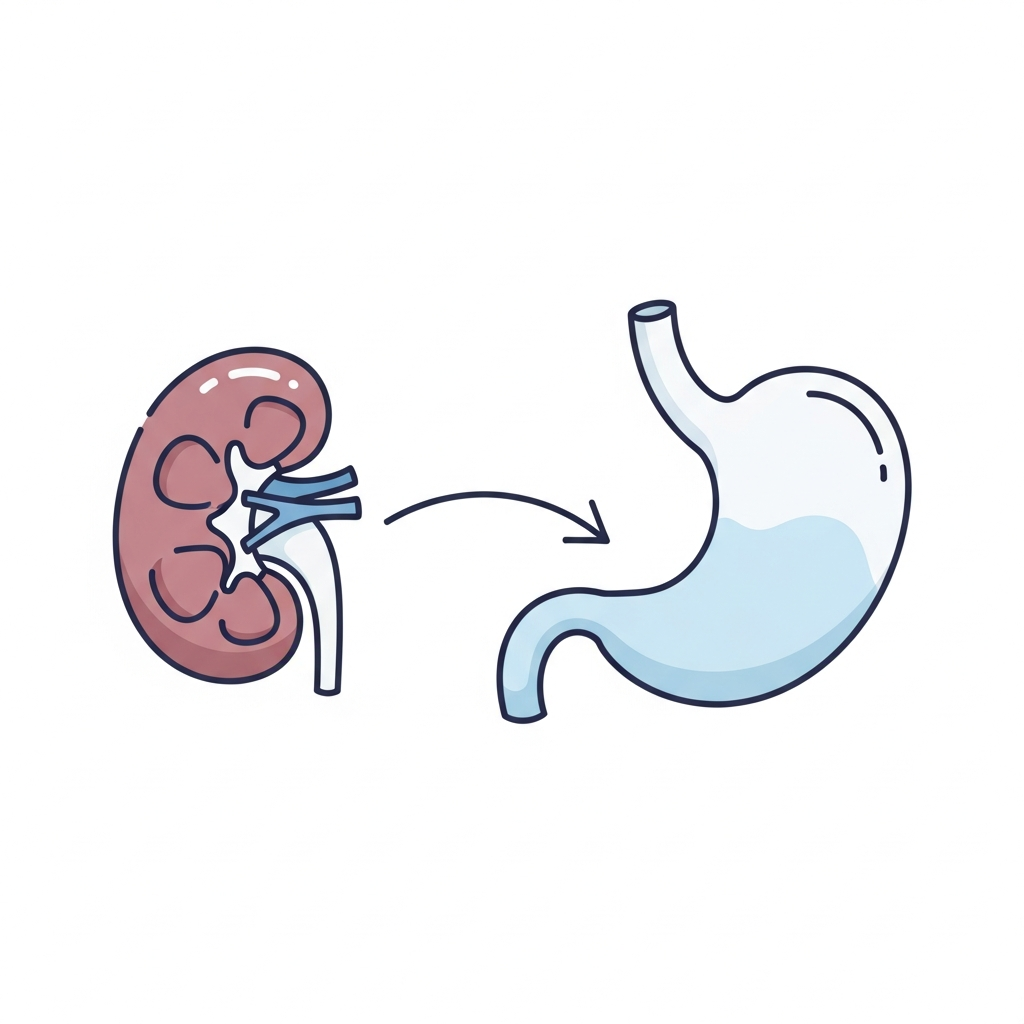
Your kidneys and your digestive system are closely connected in ways scientists are just starting to understand. Recent research has revealed that chronic kidney disease severity linked to gastroparesis is a significant health concern.
This article explains how declining kidney function affects stomach health, the symptoms to watch for, and how to manage these risks.
Why Chronic Kidney Disease Severity Is Linked to Gastroparesis
Recent studies show a clear connection between kidney function and how fast the stomach empties. A major study from the Cleveland Clinic examined more than 3.5 million patients with gastroparesis.

Researchers found that as kidney function declines, the risk of developing stomach paralysis increases.
A Severity-Dependent Relationship
The risk of gastroparesis varies depending on the stage of chronic kidney disease (CKD). Doctors assess kidney function using the estimated glomerular filtration rate (eGFR).
As eGFR decreases, waste products accumulate in the bloodstream. Research shows that the prevalence of gastroparesis rises in direct proportion to this decline, demonstrating that digestive health is closely tied to kidney disease severity.
The High Stakes of End-Stage Renal Disease (ESRD)
Stage 5 CKD, also known as end-stage renal disease (ESRD), occurs when kidney function drops below 15 percent of normal capacity.
Patients at this stage face the highest risk of developing gastroparesis. Delayed gastric emptying can worsen uremic symptoms and significantly increase the overall disease burden.
Understanding Chronic Kidney Disease Stages
To understand why chronic kidney disease severity linked to gastroparesis matters, it is important to know the stages of CKD.
Mild to Moderate Kidney Function Loss (Stages 1–3a)
Stage 1 involves kidney damage with a normal eGFR of 90 or higher.
Stage 2 represents mild functional decline with an eGFR between 60 and 89.
Stage 3a indicates moderate kidney impairment with an eGFR between 45 and 59.
Symptoms are often absent at these stages, but cardiovascular risk and future kidney decline already begin.
Severe and Advanced Stages (Stages 3b–5)
Stage 3b is defined by an eGFR of 30 to 44.
Stage 4 represents severe kidney damage with an eGFR between 15 and 29.
Stage 5 indicates kidney failure with an eGFR below 15.
At these stages, the association between chronic kidney disease severity and gastroparesis becomes more clinically apparent.
Identifying Symptoms Across CKD Stages
Because chronic kidney disease severity is linked to gastroparesis, gastrointestinal symptoms often worsen as kidney function declines.
Symptoms in Mild to Moderate Stages
Early digestive symptoms are often subtle and nonspecific. Patients may experience:
• Mild fatigue
• Reduced appetite
• Early satiety after meals
These signs are often overlooked but may reflect delayed gastric emptying.
Symptoms in Severe and Advanced Stages
Advanced CKD may cause pronounced gastrointestinal symptoms, including:
• Persistent nausea and vomiting
• Metallic or unpleasant taste
• Unintentional weight loss
• Severe fatigue and weakness
• Cognitive difficulty
• Dry or itchy skin
Complications of Gastroparesis in Kidney Patients
When chronic kidney disease severity is linked to gastroparesis, management becomes more complex.
Protein-Energy Wasting (PEW)
Gastroparesis limits nutrient intake and absorption, increasing the risk of protein-energy wasting (PEW).
PEW is associated with increased hospitalization, poor outcomes, and higher mortality in advanced CKD.
Worsening Prognosis and Symptom Burden
Delayed gastric emptying complicates fluid management, worsens metabolic acidosis, and increases overall symptom burden.
Management and Risk Reduction Strategies
Managing chronic kidney disease severity linked to gastroparesis requires coordinated care.
Dietary Adjustments
A renal dietitian can design a nutrition plan that supports both kidney and gastric health.
Key strategies include:
• Small, frequent meals
• Sodium and phosphorus restriction
• Adequate high-quality protein intake
Medication Review
Reduced kidney clearance allows medications to accumulate, potentially worsening gastric motility.
NSAIDs such as ibuprofen should be avoided. All medications and supplements should be reviewed by a healthcare provider.
The Role of Cardiovascular Health
Cardiovascular disease is the leading cause of mortality in CKD.
Blood Pressure Control
Maintaining blood pressure below 130/80 mmHg slows kidney decline and reduces cardiovascular risk.
ACE inhibitors or ARBs are commonly prescribed for renal protection.
Reducing Cardiac Risk
Statin therapy, regular physical activity, and smoking cessation significantly reduce cardiovascular events in CKD patients.
Diagnosis and Monitoring
Doctors assess whether chronic kidney disease severity is linked to gastroparesis using routine tests.
Blood and Urine Testing
• Serum creatinine to calculate eGFR
• Urine albumin-to-creatinine ratio (uACR)
Imaging and Specialized Tests
Renal ultrasound and, in select cases, kidney biopsy may be required.
Gastric emptying studies confirm gastroparesis diagnosis.
Living Well With Advanced Kidney Disease
Although advanced CKD is challenging, quality of life can be maintained with proper care.
Future Planning
Patients with Stage 4 CKD should begin planning for dialysis or transplant evaluation.
Kidney transplantation offers the best long-term outcomes for eligible patients.
Mental and Social Well-Being
Emotional support, social engagement, and adherence to medical advice are essential components of long-term care.
Conclusion
The association between chronic kidney disease severity and gastroparesis is well established.
As kidney function declines, digestive complications increase, making early detection and comprehensive management critical.
Monitoring eGFR, addressing gastrointestinal symptoms early, and maintaining nutritional health can significantly improve outcomes.
FAQ
Which CKD stage is most associated with gastroparesis?
Advanced CKD, particularly Stage 5 (ESRD), shows the strongest association.
Can gastroparesis affect kidney transplant eligibility?
Yes. Poor nutritional status may influence transplant evaluation.
How is gastroparesis diagnosed in CKD patients?
Gastric emptying studies are commonly used, though medications may affect results.
Does metabolic acidosis worsen digestive symptoms?
Yes. Metabolic acidosis contributes to nausea and systemic discomfort.
Is there a diet suitable for both CKD and gastroparesis?
Yes, but it must be individualized by a renal dietitian.
Analogy for Understanding
Think of your body as a restaurant. The kidneys are the cleaning crew, and the stomach is the delivery door. When waste removal slows, the delivery door becomes blocked, preventing nourishment from reaching the body efficiently.