Prioritising Rest: The Vital Link Between Sleep and Activity for Optimal Health
Introduction
Many people treat sleep as a reward.
They believe rest comes after work, exercise, and responsibilities.

This mindset is common but harmful.
Sleep is not optional. It is a biological need.
A large global study shows that most people fail to meet both recommended sleep (7–9 hours) and activity (8,000 steps) guidelines at the same time.
In this article, you will learn the vital link between sleep and activity and why prioritising rest can help you move more and stay healthier overall.
You will also discover practical strategies to balance sleep and exercise without sacrificing your health.
Understanding the Relationship: The Vital Link Between Sleep and Activity
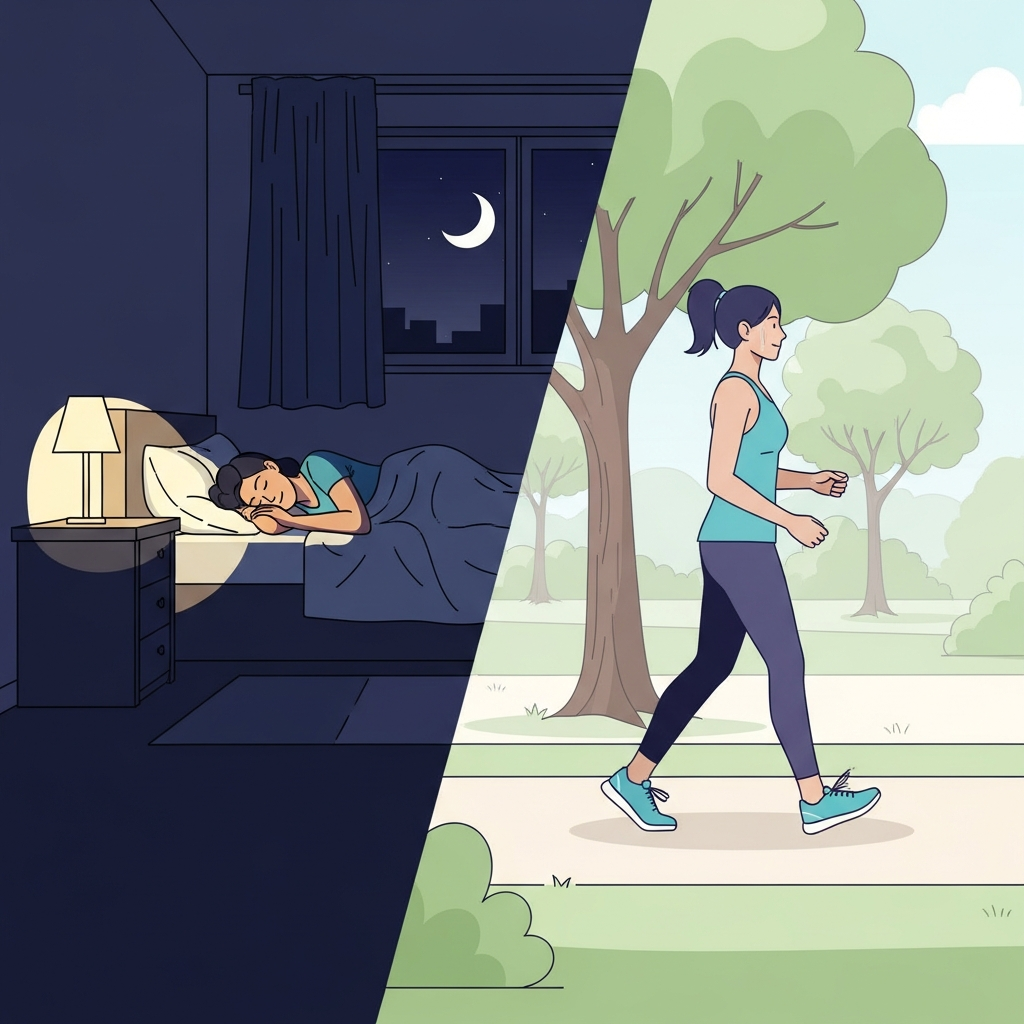
Sleep and physical activity influence each other every day.
Researchers describe this connection as bidirectional — each affects the other over a 24-hour period.

However, recent evidence suggests that sleep is a stronger predictor of next-day activity than the other way around.
High-quality sleep consistently leads to better movement the next day, while exercise does not always guarantee improved sleep. For more on how sleep and activity relate at a biological level, see this research article:
➡️ Sleep and Activity: Relationships Between Behaviors and Health.
Sleep as the Primary Driver
Good sleep fuels your energy, focus, and drive to move more.
Without adequate rest, your motivation to exercise drops.
Sleep is foundational — it provides the energy you need to be active.

When you sleep well:
Your energy levels rise.
Your muscles recover more effectively.
Your mood improves.
Your cognitive function sharpens.
Without it, even light activities can feel exhausting.
The Health Risks of Neglecting the Link
Neglecting sleep and physical activity puts your health at risk.
Insufficient sleep and inactivity are each linked to major health problems like:
Obesity
Type 2 diabetes
Heart disease
Depression
Ignoring both sleep and activity together significantly increases overall health risk.
For evidence on how exercise and sleep affect disease outcomes, see this review on the role of physical activity and sleep in reducing cardiovascular risk:
➡️ Exercise and Sleep in Cardiovascular Health.
Why Prioritising Rest Boosts Your Daily Activity
Many people think less sleep means more time to exercise.
In reality, not sleeping enough usually leads to less movement.
The “Sweet Spot” for Movement
Research indicates that 6 to 7 hours of sleep is associated with the highest average daily steps.
Sleeping less than 6 hours often causes fatigue.
Sleeping more than 9 hours often reduces physical activity the next day.
This shows a balanced sleep duration supports movement best.
What matters most is waking up refreshed and ready to move.
Quality Over Quantity
It’s not just duration that matters.
The quality of your sleep — how quickly you fall asleep and how uninterrupted your rest is — predicts how active you will be the next day.
A night of efficient sleep often leads to:
Higher motivation for movement.
Better stamina during activity.
Increased mood and mental clarity.
The Role of Physical Fatigue
Physical activity increases your sleep drive — your body’s natural need to rest.
Being moderately active during the day can help you feel tired at night and fall asleep more easily.
However, the timing of that activity affects your sleep quality.
According to recent research, strenuous exercise too close to bedtime can negatively impact sleep duration and quality.
This is especially true when exercise ends less than 4 hours before sleep, which may delay sleep onset and disrupt recovery cycles:
➡️ Exercise Before Bed Is Linked With Disrupted Sleep. (Monash University)
Strategically Prioritising Rest and Physical Activity
Balancing sleep and movement doesn’t require extreme schedules.
Small adjustments can make a big difference.
The Importance of Exercise Timing
The timing of your workouts can help or hurt your sleep.
Strenuous exercise within four hours of bedtime may make it harder to fall asleep.
This is because intense activity increases your heart rate and body temperature near bedtime, which delays your body’s wind-down process. (Monash University)
To protect your rest:
Finish vigorous workouts at least 4 hours before bed.
Prefer morning or afternoon sessions for intense activity.
Low-Impact Movement Benefits
Light activity is often safe before bedtime.
Even 10 minutes of walking, gentle yoga, or stretching can improve sleep quality without overstimulating your body.
These movements:
Calm your nervous system.
Help your body transition into sleep mode.
Reduce pre-sleep stress.
Consistency vs. Intensity
Daily movement matters more than sporadic intense workouts.
Regular, moderate activity supports sleep better than irregular bursts of exercise.
Consistency helps by:
Strengthening circadian rhythms.
Improving sleep onset and duration.
Enhancing recovery processes at night.
Conclusion: Prioritising Rest to Fuel an Active Life
Sleep is an active contributor to your health.
It is not passive downtime.
Choosing rest when you are tired is often wiser than forcing an early workout.
Reliable sleep preserves your energy, mood, and ability to move well the next day.
Final Recommendation
If you must choose between an extra hour of sleep or an early morning workout, choose sleep.
Small changes like reducing screen time before bed and keeping a consistent sleep schedule can naturally boost your motivation for activity.
FAQ: Prioritising Rest and Activity
1. Is it better to sleep or exercise if I can only do one?
If you are sleep-deprived, choose sleep.
Good rest builds the foundation for consistent activity.
2. How many steps should I aim for daily for better health?
Most guidelines recommend around 8,000 steps per day for adults.
Older adults may benefit from 6,000 steps or more.
3. Does exercise at night always ruin sleep?
Not always.
High-intensity workouts too close to bedtime can disrupt sleep, but gentle activities like light stretching or yoga may help you relax.
4. How much sleep do I need to feel motivated to move?
Most adults need 7 to 9 hours of sleep.
Quality often matters more than exact hours.
Analogy for Understanding Sleep and Activity
Think of your body like a smartphone.
Sleep is the charger, and activity is the apps you run.
If the phone isn’t charged enough, apps crash no matter how powerful they are.
Similarly, if your sleep is poor, your body won’t support sustained movement.
Prioritise rest first.
Movement becomes more effective when fueled by good sleep.