Introduction
Smart pills are no longer science fiction. They are already part of modern medicine and daily life. In the United States, interest in these innovations is rising fast.
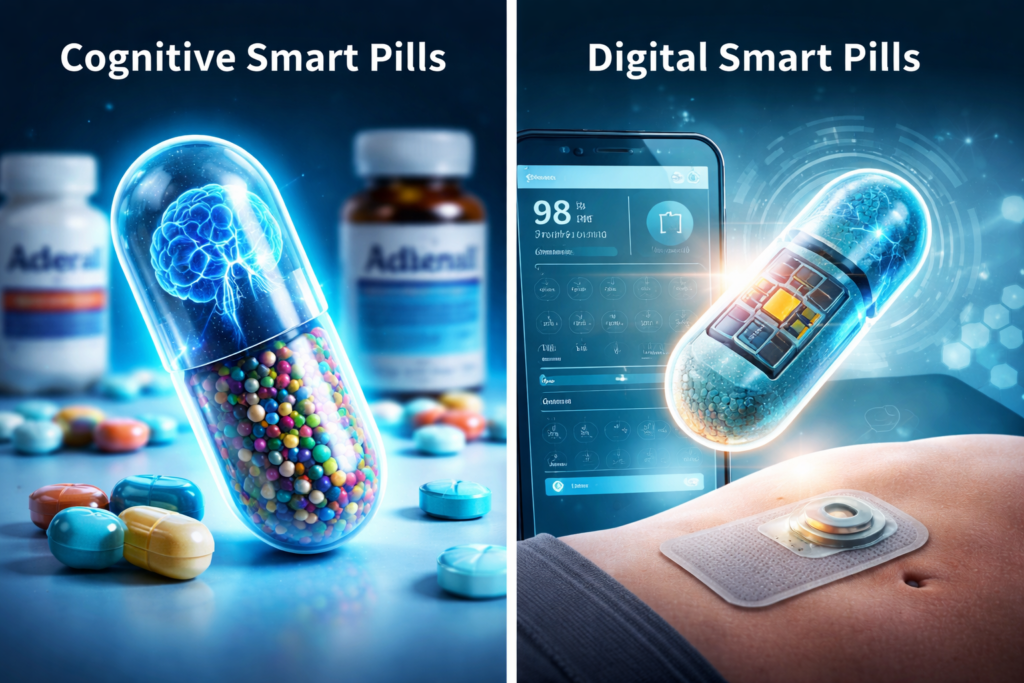
At first, the term sounds simple. But in reality, it refers to two very different things. First, there are nootropics, often called brain-boosting drugs. Second, there are digital capsules with ingestible sensors used in healthcare.
In this article, you will learn what these pills really are, how they work, their benefits, and their risks. Most importantly, we will explore the ethical and privacy concerns in modern medicine.
What Are Smart Pills?
This broad category of ingestible technologies can be divided into two main types:
- Cognitive enhancers (nootropics)
- Digital capsules for medical monitoring
Although they share the same name, their purpose and impact are very different.
Types
1. Cognitive Smart pills (Nootropics)
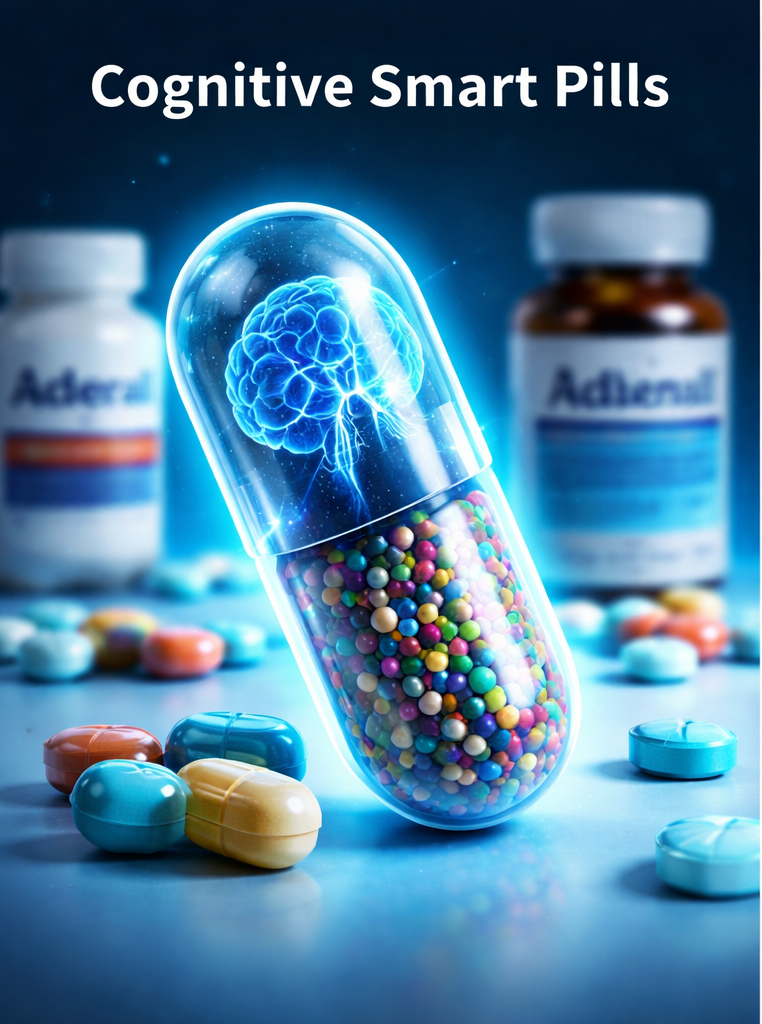
These are substances used to improve brain function. Many people take them to increase focus, memory, or alertness.
They are popular among:
- College students
- Professionals
- Tech workers
- Shift workers
Common examples include prescription stimulants like Adderall, Ritalin, and Modafinil. However, these drugs were originally designed to treat medical conditions, not healthy individuals.
2. Digital Smart pills with Ingestible Sensors
These are very different. They contain tiny sensors that activate once swallowed.
The sensors can:
- Confirm medication ingestion
- Send data to external devices
- Help doctors track patient adherence
This technology is mainly used in serious medical conditions such as schizophrenia and bipolar disorder.
How Cognitive Pills Work
Nootropics affect brain chemistry, often acting on neurotransmitters like dopamine and norepinephrine.
As a result, users may feel:
- More alert
- More focused
- Less tired
However, increased alertness does not always mean better thinking.
Do They Really Improve Brain Performance?
This is where the debate begins.
Some short-term studies show mild benefits, such as improved attention and reaction time. However, long-term evidence is weak.
In healthy individuals:
- Memory improvement is inconsistent
- Creativity may decrease
- Overconfidence may increase
In my opinion, these substances do not make people smarter. Instead, they make people feel more productive, which is not the same thing.
Risks of Cognitive Pills
Common Side Effects
- Insomnia
- Anxiety
- Increased heart rate
- Loss of appetite
Serious Risks
- Dependency
- Addiction
- Cardiovascular issues
Misuse is common among students and professionals, raising both medical and ethical concerns.
Digital Capsules in Modern Medicine
These devices use ingestible sensors made from safe materials like magnesium and copper. Once swallowed, the sensor sends a signal to a wearable patch.
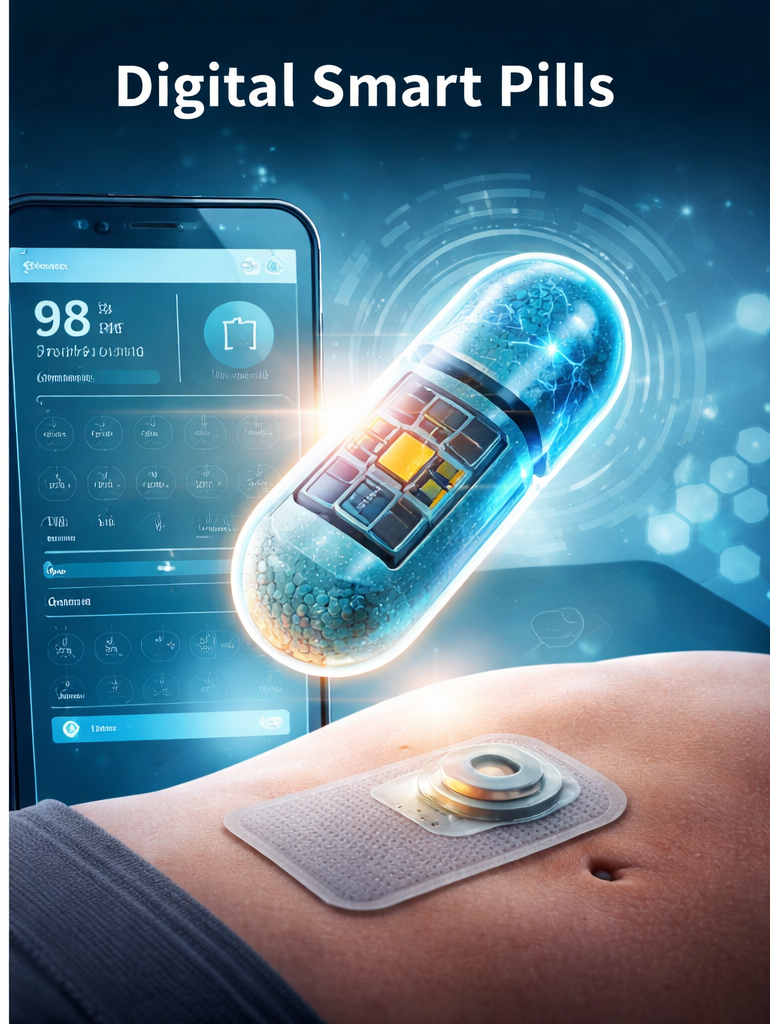
This data is then transmitted to:
- Smartphones
- Medical dashboards
- Healthcare providers
Why They Are Used
Digital capsules are mainly used to monitor medication compliance. This is especially important in conditions where missing doses can be dangerous, such as:
- Schizophrenia
- Tuberculosis
- HIV
- Organ transplant patients
From a clinical perspective, this technology can save lives.
Benefits
Key advantages include:
- Improved medication adherence
- Reduced hospital readmissions
- Better disease control
- Objective health data
Non-Invasive Diagnostics
Beyond compliance, these devices are also used for diagnostics.
Some can:
- Measure pH levels
- Track temperature
- Monitor gut motility
- Capture images inside the body
This reduces the need for invasive procedures like endoscopy.
Ethical Concerns
Despite their benefits, these technologies raise serious ethical questions.
The biggest concern is consent. Are patients truly free to refuse? Or are they pressured by systems, doctors, or insurers?
Privacy and Security Risks
Digital capsules generate sensitive health data, often stored on cloud servers.
Potential risks include:
- Data breaches
- Unauthorized access
- Commercial misuse
- Insurance discrimination
Cybersecurity vulnerabilities also exist, such as signal interception or device spoofing.
Impact on Doctor-Patient Relationship
Medicine relies on trust. Monitoring through digital capsules may shift this relationship toward surveillance, making patients feel watched rather than cared for.
Regulatory Challenges
Currently, regulation in the United States is limited. While the FDA approves devices for safety, long-term ethical oversight is weak.
There is no clear framework for:
- Data ownership
- Patient rights
- Third-party access
Traditional Medicine vs. Digital Monitoring
Traditional care relies on communication and trust. These new technologies rely on data and monitoring. Both have value, but technology should support care, not replace human judgment.
Public Perception
Public opinion in the U.S. is divided. Some see these pills as innovation, while others see them as intrusive. Acceptance depends on transparency, trust, and clear benefits.
Mental Health Treatment
Mental health is where these devices are most controversial. Monitoring patients with schizophrenia may improve outcomes, but it also risks reinforcing stigma.
Future Developments
Looking ahead, advancements may include:
- Real-time disease detection
- Personalized drug dosing
- AI-driven diagnostics
However, progress must be guided by ethics.
Professional Opinion
As a medical professional, I see both promise and danger. These technologies can improve care when used carefully. However, misuse could harm trust, privacy, and autonomy.
Key Takeaways
- Two main types: nootropics and digital capsules
- Cognitive benefits are often overstated
- Medical monitoring shows real value
- Ethical and privacy risks are significant
- Regulation must catch up with innovation
Conclusion
These innovations represent a powerful shift in healthcare and human performance. They offer real benefits, especially in medical monitoring and diagnostics.
However, without strong ethical frameworks, they also pose serious risks. The future depends on balance—innovation must move forward, but human values must remain at the center of medicine.
Read more: https://themindbodyjournal.com/blog/