Discover how yoga and technology in modern addiction recovery improve brain health and support systems. Learn about the latest research and digital tools.
Yoga and Technology in Modern Addiction Recovery
The opioid crisis is currently a major global health issue that requires urgent action. Traditional medical treatments are vital, but they often face high relapse rates and low patient engagement. However, a powerful shift is happening in how we treat substance use disorders. Researchers are now combining ancient somatic practices with 21st-century digital tools. This article explores the role of yoga and technology in modern addiction recovery.

In the following sections, you will learn how these tools repair the brain’s reward system. Furthermore, we will examine clinical studies that prove yoga can cut withdrawal time in half. We will also look at how social media platforms like TikTok provide essential community support. Finally, you will discover how AI-powered headsets are being developed to predict health crises.
The Neurobiology of Yoga and Technology in Modern Addiction Recovery
To understand the benefits, we must first look at how addiction changes the human brain. Specifically, prolonged drug use dysregulates the reward circuitry and the stress system. Yoga and technology in modern addiction recovery work together to address these biological imbalances.
Restoring Dopamine and Reward Processing
Dopamine is a chemical that regulates the reward value of food, social interaction, and substances. Drugs of abuse cause a transient spike in dopamine, which leads to a feeling of euphoria. Consequently, chronic drug use eventually leads to a decrease in dopamine D2 receptors. This reduction is linked to increased compulsive behavior and a loss of executive function.
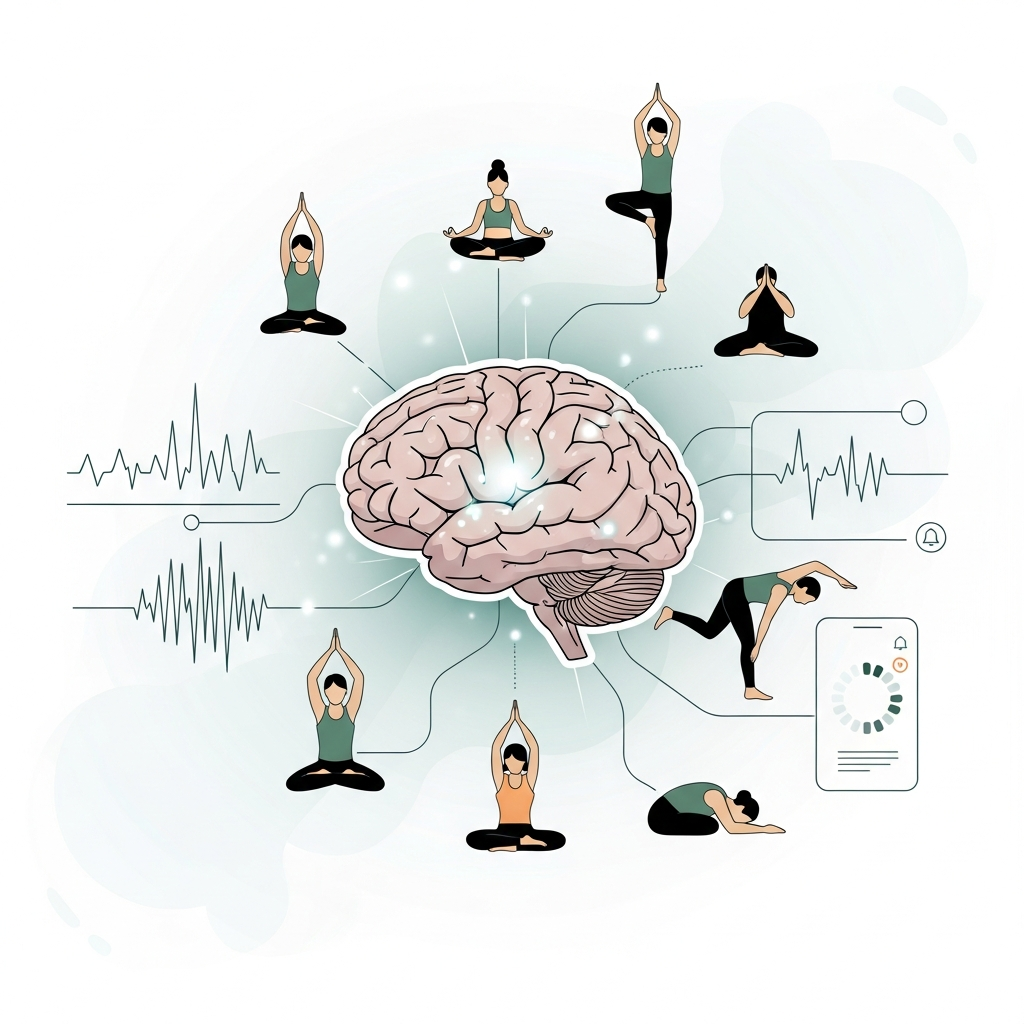
Moreover, research suggests that yoga can naturally restore these chemical levels. For example, a study on Yoga Nidra meditation showed a 65% increase in endogenous dopamine release. This increase helps manage compulsive drug-seeking behaviors by improving striatal dopamine binding. Therefore, yoga serves as a biological tool to help the brain feel pleasure again without drugs.
Balancing the Autonomic Nervous System
Withdrawal from opioids often causes the nervous system to “freak out”. This happens because the body loses the calming effect of the drug. As a result, the sympathetic “fight-or-flight” system becomes overactive. This imbalance leads to anxiety, joint pain, and severe physical distress.
In contrast, practicing yoga stimulates the vagus nerve to promote relaxation. This shift towards “vagal dominance” increases parasympathetic activity. Furthermore, researchers use Heart Rate Variability (HRV) to measure this balance. Improved HRV accounts for roughly one-quarter of the benefits seen in speeding up withdrawal recovery.
Strengthening Inhibitory Control
Addiction often impairs the parts of the brain responsible for self-regulation. Specifically, the prefrontal cortex and anterior cingulate gyrus show reduced activity in addicted individuals. Yoga requires intense focus on breathing and internal body sensations.
This practice strengthens the brain’s “inhibitory control,” which is the ability to say “no” to a craving. For instance, even a single session of yoga has been shown to increase inhibitory control in people with nicotine dependence. Similarly, long-term practitioners show higher cortical thickness in the prefrontal cortex.
Clinical Breakthroughs: Accelerating the Path to Sobriety
New clinical trials provide strong evidence for the effectiveness of yoga and technology in modern addiction recovery. These studies show that yoga is not just a “wellness” activity but a legitimate clinical intervention.
Halving Opioid Withdrawal Time
A groundbreaking study conducted by NIMHANS and Harvard Medical School looked at men with opioid use disorder. In this trial, 30 men received standard medication plus ten 45-minute yoga sessions. Another group received only the medication, buprenorphine.
The results were startling. The yoga group achieved stable withdrawal in a median of five days. In comparison, the medication-only group took nine days to reach the same level of stability. Consequently, those using yoga recovered 4.4 times faster than those who did not.
Increasing Treatment Retention
Staying in a treatment programme is one of the biggest challenges for those in recovery. One study in North Carolina integrated yoga into a Medication Assisted Treatment (MAT) programme. Before the project, behavioral health attendance was under 50%.
However, when yoga was added, attendance rose to a mean of 70.24%. Most importantly, the overall retention rate for the yoga project was 100%. Every participant signed up for the next series of sessions. This shows that yoga makes the recovery process more desirable and easier to stick with.
Reducing Perceived Stress and Pain
Stress is a major driver of relapse in early recovery. A pilot study by Lander et al. evaluated a 12-week yoga intervention for individuals in MAT. They found that yoga significantly reduced “perceived stress” compared to standard care.
Additionally, participants reported falling asleep about an hour faster on average. They also reported lower levels of anxiety and physical pain. Because discomfort often drives people back to drug use, these improvements are critical for long-term success.
Standard Care and the Role of Yoga and Technology in Modern Addiction Recovery
To appreciate these new methods, we must look at the current standard for withdrawal management (WM). The World Health Organization (WHO) provides clear guidelines for this process.
The Medical Foundation of Recovery
Withdrawal management refers to the medical and psychological care of patients ceasing drug use. For opioid dependence, doctors often use medications like buprenorphine or methadone. Buprenorphine is highly effective because it reduces cravings without producing a “high”.

Furthermore, standard care involves monitoring patients 24 hours a day. Healthcare workers use scales like the Short Opioid Withdrawal Scale (SOWS) to track symptoms like nausea and muscle cramps. However, medication alone does not address the underlying stress and psychological needs of the patient.
Creating a Healing Environment
The WHO suggests that the treatment area should be quiet and calm. Patients should be allowed to rest and engage in calming practices like meditation. Importantly, patients should not be forced to do physical exercise during withdrawal.
This is why the yoga sessions in the NIMHANS-Harvard study were designed to be “low-threshold”. Clinicians even conducted sessions at the patient’s bedside when necessary. This approach ensures that the physical benefits of yoga are accessible even when the patient feels their worst.
Digital Tools: Technology in Modern Addiction Recovery
Technology is now playing a central role in how people find and maintain sobriety. From social media to advanced hardware, digital tools are creating a new safety net.
TikTok as a Global Support Community
TikTok has emerged as a primary source of information and support for young people. A recent study analyzed over 39,000 substance-related videos on the platform. Interestingly, they found that Recovery Advocacy content is the most common type of video, making up 33.9% of the posts.
In these “digital recovery narratives,” creators share their sobriety milestones and cautionary tales. These videos help normalize the addiction experience and encourage others to seek help. Furthermore, recovery-focused hashtags like #addiction and #sober act as central bridges between different online communities.
Algorithmic Closeness and Support
TikTok’s algorithm connects users based on their engagement patterns. This creates “algorithmic closeness,” where subcommunities form around shared interests in recovery. Some users even use “algospeak”—coded hashtags like #dr00gtiktok—to find each other while avoiding strict content filters.
Moreover, hashtags like #harmreductionsaveslives generate very high levels of engagement. This suggests that users are actively looking for ways to stay safe and support each other. Platforms are now looking for ways to preserve these supportive spaces while still removing harmful content.
Future Innovations: AI and Geocoding
We are also seeing the rise of specialized hardware in recovery. For example, scientists have developed an AI-powered headset that can predict seizures. Similar technology could eventually be used to predict drug cravings or physical health crises.
Additionally, researchers plan to integrate geocoding and “just-in-time” alerts. These digital tools would track a person’s location and send a supportive message or alert if they enter a high-risk area. This kind of proactive support could significantly reduce the chances of a relapse.
Trauma-Sensitive Yoga: A Specialized Approach
Many individuals struggling with addiction also have a history of trauma. For these people, traditional yoga classes can sometimes be triggering. Consequently, experts developed Trauma-Sensitive Yoga (TSY).
The Four Themes of Healing
David Emerson identified four key themes for trauma-informed yoga:
- Experiencing the Present Moment: Helping survivors feel safe in their bodies right now.
- Making Choices: Giving students control over which poses they do.
- Effective Action: Practicing small, successful physical movements.
- Creating Rhythms: Building a sense of connection with others through movement.
A Safe and Predictable Environment
TSY classes differ from standard “postural yoga” in several ways. First, the space must be welcoming and safe. The room is kept brightly lit, and instructors always remind students where the exits are.
Second, the language used is non-directive. Instead of telling a student exactly what to do, the teacher might say, “If you like, you can lift your arm”. Furthermore, instructors do not use physical “hands-on” adjustments. This gives the participant the space they need to feel in control of their own body.
Managing Triggers Without Drugs
Traumatized individuals often struggle to soothe their overactive internal sensations. They frequently rely on substances like opioids to “numb” these feelings. TSY teaches them to identify physical sensations without judgment.
When students feel safe and grounded, they reach a “mid-range level of arousal”. In this state, they can work through their somatic memories effectively. This makes yoga a powerful “primer” for traditional psychotherapy.
My Opinion on Holistic Recovery
Note: This section contains information that is not from the provided sources. You should independently verify these perspectives.
In my view, the integration of yoga and technology in modern addiction recovery represents a necessary evolution in healthcare. For too long, we have treated addiction as a purely chemical problem. While medication is essential to save lives, it does not teach a person how to live in their own skin again.
I believe that the combination of physical movement and digital community provides a “bottom-up” and “top-down” approach to healing. Yoga heals the nervous system from the bottom up, while technology provides the social structure and information from the top down. As we see in the sources, this combination significantly improves the speed and quality of recovery. Moving forward, I hope to see these interventions offered for free in every public health clinic.
Conclusion
The evidence is clear: yoga and technology in modern addiction recovery are changing lives. Yoga repairs the brain’s dopamine system and balances the overactive nervous system seen during withdrawal. Clinical trials show it can cut recovery time nearly in half and keep patients in treatment longer.
Furthermore, technology is breaking down the walls of isolation. Digital narratives on TikTok and AI-powered health tools are providing constant support. By combining these ancient and modern tools, we can create a more compassionate and effective path to sobriety.
FAQ: Yoga and Technology in Modern Addiction Recovery
1. Is yoga safe to do during severe opioid withdrawal? Yes, but it must be adapted. Researchers used low-threshold, bedside sessions that focused on gentle postures and breathing. Patients should never be forced to exercise if they feel too unwell.
2. Can TikTok really help someone stay sober? The study shows TikTok is a major platform for “Recovery Advocacy”. Digital narratives help reduce stigma and encourage people to seek professional help. However, it should be used as a support tool, not a replacement for medical care.
3. What is the main benefit of buprenorphine? Buprenorphine is considered the best medication for managing moderate to severe withdrawal. It reduces drug cravings and prevents the physical “freak out” of the nervous system.
4. How does yoga help the brain’s reward system? Addiction lowers the number of dopamine D2 receptors. Yoga, especially Yoga Nidra, can increase dopamine levels by 65% and improve the brain’s ability to regulate impulses.
5. What makes yoga “trauma-sensitive”? Trauma-sensitive yoga emphasizes choice, safety, and non-directive language. It avoids physical contact and ensures the environment is predictable and safe for the student.
Analogy for Understanding: Think of a person in recovery as someone trying to walk across a high-wire. Medication is the safety harness that prevents them from falling to the ground. Yoga is the long balancing pole that helps them steady their shaky nerves and find their center. Technology is the group of people on the other side, cheering them on and providing the GPS coordinates to make sure they reach the end of the wire safely. Without all three, the crossing is much more difficult and frightening.