
Cyclospora Diarrhea Outbreak 2026: Symptoms, Causes, Foods to Avoid & When to See a Doctor
If your stomach has felt off lately — or you’ve seen headlines about “explosive diarrhea” spreading across the U.S. — you’re not imagining things. Health departments in more than 30 states are currently tracking a real rise in cyclosporiasis, an intestinal illness caused by a microscopic parasite called Cyclospora cayetanensis.
This isn’t a one-off scare. It’s a seasonal pattern that shows up most summers, but 2026 is shaping up to be one of the more active years on record. Here’s what’s actually going on, what the science says, and how to protect your family without panicking.

What Is Cyclospora?
Cyclospora is a one-celled parasite too small to see without a microscope. It lives in the intestines and spreads when people eat food or drink water contaminated with human feces containing the parasite’s egg-like form, called an oocyst.
Unlike norovirus or many bacterial infections, Cyclospora does not spread person-to-person through casual contact. You generally get it by swallowing contaminated produce or water — not by being near someone who’s sick.
Why Cases Are Increasing in 2026
A few things are converging this year:
- Seasonal timing. Cyclosporiasis season in the U.S. typically runs May through August, when demand for fresh produce peaks.
- Reduced federal surveillance. Budget-related cuts to a key CDC foodborne tracking system have made it harder to quickly connect cases across states, according to public health reporting.
- A genuinely higher case count. Even accounting for tracking gaps, several states are reporting more cases in the past few weeks than during the same period in 2025.
Health officials have been careful to note that not all of this year’s cases are necessarily linked to one single source — some may reflect several separate, unrelated contamination events happening around the same time.
Current Outbreak Snapshot in the United States
As of mid-July 2026, here’s what CDC and state health data show:
| Metric | Figure (as of July 2026) |
|---|---|
| States reporting cases | 31+ |
| Confirmed domestically acquired cases (CDC) | 800+ |
| Additional cases under review | 1,500+ |
| Hospitalizations | Under 100 |
| Deaths reported | None |
| Hardest-hit state | Michigan (thousands of cases) |
Michigan has reported the largest single-state total, with health officials there pointing to leafy lettuce and bagged salad mixes as a likely, though not yet confirmed, contributor. Federal and state investigators are also looking into whether lettuce served at some Taco Bell locations played a role, after several Michigan restaurants temporarily pulled lettuce, cilantro, onion, pico de gallo, and guacamole from their menus. No specific grower, supplier, or single confirmed source has been announced, and this part of the investigation is still active.
Important: This is an active, evolving investigation. Numbers change weekly, and the CDC has said the true case count is almost certainly higher than what’s officially reported, since many people recover at home without ever being tested.
Symptoms of Cyclospora Infection
Symptoms usually start about a week after exposure, though it can range from two days to two weeks or more. That delay is one reason it’s hard to pinpoint which meal caused it.
Common symptoms include:
- Watery diarrhea (often frequent, sometimes described as “explosive”)
- Loss of appetite
- Stomach cramps and bloating
- Nausea, occasionally vomiting
- Fatigue
- Mild weight loss
- Low-grade fever (less common)
A distinctive feature of this illness is that symptoms can improve and then relapse in cycles, even without new exposure — a pattern less typical of viral stomach bugs like norovirus.
How the Infection Spreads
Cyclospora spreads through the fecal-oral route — meaning contaminated waste eventually makes contact with something you eat or drink. This usually happens through:
- Fresh produce irrigated or washed with contaminated water
- Produce handled by workers without proper sanitation
- Contaminated water used in food prep
- Rarely, contaminated recreational water
It does not spread through coughing, sneezing, or casual person-to-person contact.
Foods Most Commonly Linked to Cyclospora
Historically — and in this year’s ongoing investigations — the following fresh items have been associated with outbreaks:
| Foods Under Investigation / Previously Linked | Generally Considered Lower Risk |
|---|---|
| Bagged salad mixes and pre-washed lettuce | Cooked vegetables |
| Fresh cilantro and basil | Frozen vegetables (commercially blanched) |
| Raspberries | Canned fruits and vegetables |
| Snow peas | Thoroughly cooked meats |
| Green and white onions | Pasteurized juices |
| Fresh spinach | Dried herbs and spices |
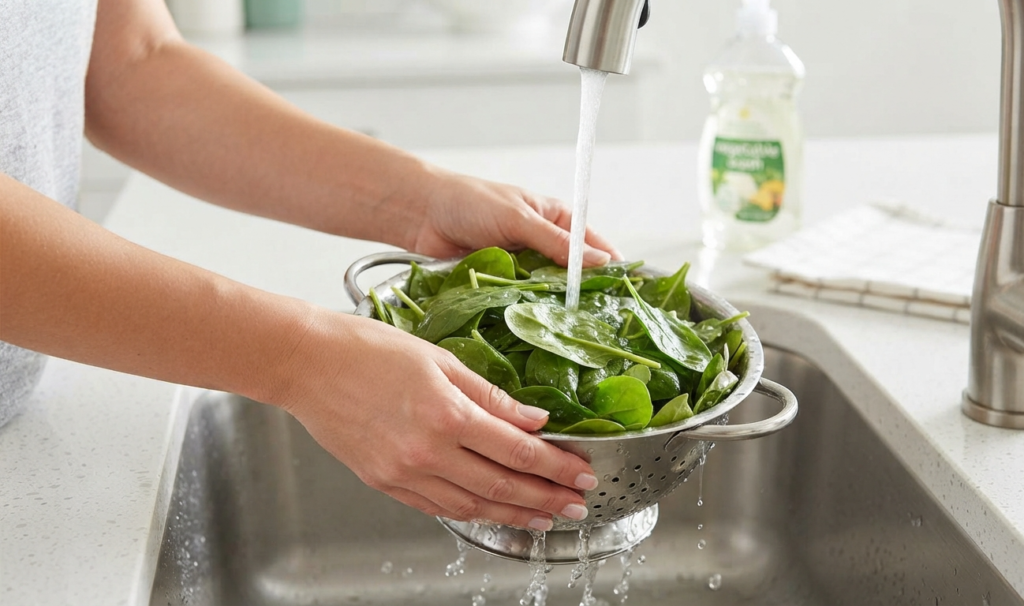
Cooking food to at least 158°F kills the parasite. Washing produce under running water can reduce contamination but won’t guarantee elimination, since the oocyst can cling tightly to surfaces.
Who Is Most at Risk?
Anyone can get cyclosporiasis, but symptoms tend to be more severe or prolonged in:
- Young children
- Older adults
- Pregnant women (due to dehydration risk)
- People with weakened immune systems, including those with HIV or on immunosuppressive medication
Diagnosis
Cyclospora is easy to miss on a routine stool test. Doctors typically need to specifically request:
- Special stool microscopy with acid-fast staining, or
- PCR (molecular) testing
Because the parasite sheds inconsistently, more than one stool sample may be needed for an accurate result.
Treatment
The standard treatment is a combination antibiotic — trimethoprim-sulfamethoxazole (commonly known as Bactrim or Septra) — usually taken for seven to ten days. People with sulfa allergies should talk to their doctor about alternative options, since substitute regimens are less well studied.
Most people recover fully with treatment. Left untreated, illness can last anywhere from a few days to over a month, with possible relapses.
Home Care
While you’re recovering:
- Drink plenty of fluids — water, oral rehydration solutions, or broth
- Rest as much as possible
- Eat bland, easy-to-digest foods (rice, toast, bananas) as tolerated
- Avoid caffeine and alcohol, which can worsen dehydration
What NOT to Do
- Don’t take anti-diarrheal medication (like loperamide) without checking with a doctor first — in some infections, it can prolong illness.
- Don’t assume it’s “just a stomach bug” if diarrhea lasts more than a few days.
- Don’t prepare food for others while symptomatic without extremely thorough handwashing.
- Don’t rely on washing alone to make risky produce “safe” — when in doubt, cook it.
Prevention Tips
- Wash hands with soap and water before and after handling fresh produce
- Rinse fruits and vegetables under running water, even pre-washed ones
- Consider buying whole heads of lettuce over pre-cut, bagged blends, discarding outer leaves and washing the core thoroughly
- Cook produce when possible, especially during active outbreak periods
- Stay informed about state and local health department advisories
Travel Advice
Cyclospora is also common in regions with less reliable water sanitation, including parts of Latin America, Southeast Asia, and the Caribbean. Travelers should:
- Avoid untreated tap water and ice made from it
- Choose cooked vegetables over raw salads when traveling
- Peel fruit yourself rather than eating pre-cut versions
When Should You See a Doctor?
See a healthcare provider if you have:
- Diarrhea lasting more than 2–3 days
- Signs of dehydration (dizziness, dry mouth, reduced urination)
- Blood in your stool
- High fever
- Symptoms in a young child, elderly person, or someone with a weakened immune system
Symptoms vs. Warning Signs
| Common Symptoms (Manage at Home Initially) | Warning Signs (Seek Care Promptly) |
|---|---|
| Watery diarrhea for 1–2 days | Diarrhea lasting more than 3 days |
| Mild cramping | Severe abdominal pain |
| Occasional nausea | Persistent vomiting, unable to keep fluids down |
| Mild fatigue | Signs of dehydration |
| No fever or low-grade fever | High fever (above 102°F) |
| — | Blood in stool |
Complications
Most people recover fully. In rare cases, prolonged or untreated infection can lead to significant dehydration, nutrient malabsorption, or extended fatigue — particularly in immunocompromised individuals.
Latest Public Health Updates
As of mid-July 2026, the CDC continues to update its cyclosporiasis surveillance page weekly. Investigators at the FDA and in multiple states, including Michigan, are conducting traceback work on lettuce and related produce, and reviewing whether specific restaurant supply chains — including some Taco Bell locations — may be connected. As of this writing, no recall has been issued and no single confirmed source has been identified. This article will be updated as new information becomes available.
Final Thoughts
A rise in Cyclospora cases is unsettling, but it’s also a manageable, treatable illness for the vast majority of people. The most useful thing you can do right now isn’t to avoid all vegetables — it’s to practice good food hygiene, pay attention to your body, and not brush off diarrhea that lingers past a couple of days.
👨⚕️ Doctor’s Review
“In my experience, people often wait too long before getting tested for parasitic infections like this one, mainly because diarrhea is so common that we tend to shrug it off. Cyclospora is a good example of why that instinct can backfire — it doesn’t always show up on a standard stool test, and it can drag on for weeks if it’s missed.
My advice is simple: if diarrhea lasts more than two or three days, especially during a period when local health departments are actively tracking an outbreak, don’t wait it out. Ask your doctor directly whether Cyclospora testing is appropriate. Stay hydrated, avoid over-the-counter anti-diarrheal medication unless your doctor clears it, and seek care sooner if you’re pregnant, elderly, a young child, or immunocompromised. This guidance reflects current recommendations from the CDC and FDA, and it isn’t a substitute for a personal evaluation from your own healthcare provider.”
Frequently Asked Questions
1. Is the 2026 Cyclospora outbreak dangerous?
For most healthy people, it’s uncomfortable but treatable, not life-threatening. As of mid-July 2026, no deaths have been reported, though dozens of hospitalizations have occurred, mostly related to dehydration.
2. Can Cyclospora spread from person to person?
No. It spreads through contaminated food or water, not through casual contact, coughing, or sneezing.
3. Is it safe to eat salad right now?
Most salad is fine, but health officials recommend extra caution with bagged lettuce mixes during this outbreak — washing whole heads yourself, cooking produce when possible, and following local advisories.
4. How long does Cyclospora diarrhea last?
Untreated, it can last from a few days to more than a month, sometimes relapsing. With proper antibiotic treatment, most people improve within a week or two.
5. Has Taco Bell been confirmed as the source?
No. As of this writing, Taco Bell is one of several elements under investigation after some locations pulled fresh ingredients as a precaution. No official source has been confirmed, and health officials note some sick patients did not eat there.
References
- Centers for Disease Control and Prevention (CDC), Cyclosporiasis Surveillance
- World Health Organization (WHO), First Steps for Managing an Outbreak of Acute Diarrhoea
- U.S. Food and Drug Administration (FDA), Cyclospora Outbreak Investigations
- Mayo Clinic, Cyclosporiasis Overview
- Cleveland Clinic, Cyclosporiasis Symptoms and Treatment
- The Hill, “Foods most likely to carry parasite Cyclospora — which are safe”
- CNN, “Cyclospora parasite diarrhea outbreak increase,” July 2026
- Business Insider, “Parasitic diarrhea outbreak: produce to avoid, how to prepare food,” July 2026
- News4JAX, “Officials investigate Taco Bell, lettuce in multistate cyclosporiasis outbreak,” July 2026
- USA Today, “Cyclospora outbreak: customer, restaurant dining,” July 2026
Pingback: Always Tired After 8 Hours of Sleep? Doctor Explains Why? 2026