
Why Am I Always Tired Even After 8 Hours of Sleep?
If you’re reading this at 2 p.m. with your third cup of coffee going cold beside you, you already know the feeling. You went to bed on time. You slept a full eight hours. And yet you woke up feeling like you’d been run over by a truck.
You’re not imagining it, and you’re not lazy. This is one of the most common complaints doctors hear, and it has a name: unrefreshing sleep. It means your body may be getting enough hours of sleep, but not enough quality sleep — or something else is quietly draining your energy underneath it all.
This article walks through the real medical and lifestyle reasons this happens, what the research actually says, and when it’s time to stop guessing and see a doctor.

Why You May Feel Tired Despite Sleeping 8 Hours
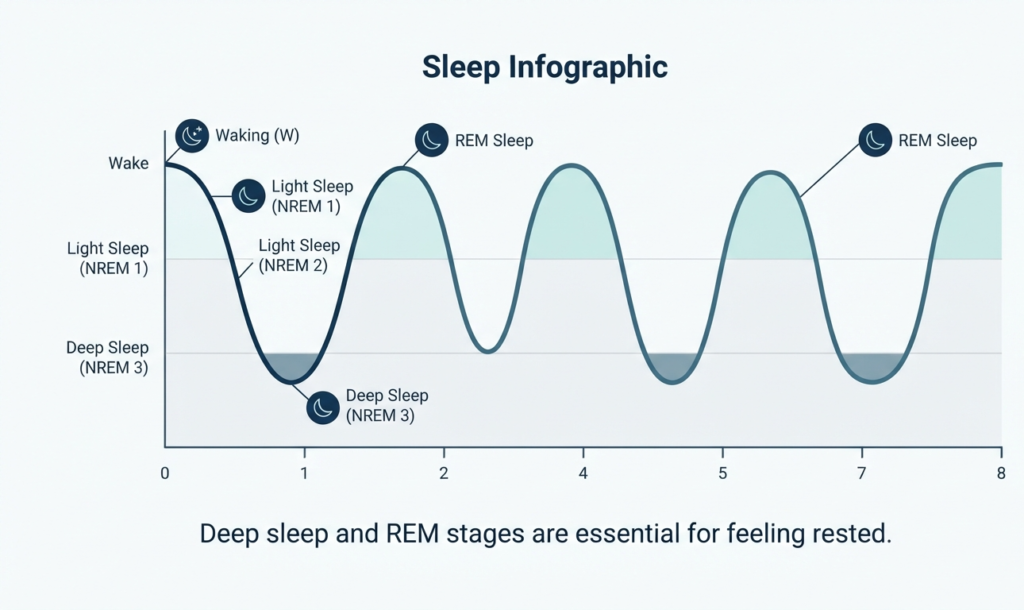
Sleep isn’t one long, uniform state. Your body cycles through several stages each night, including light sleep, deep sleep, and REM (rapid eye movement) sleep, which is when dreaming happens and the brain does much of its restorative work.
If something interrupts those cycles — even briefly, without fully waking you — you can rack up eight hours “in bed” without ever reaching the deep, restorative stages your body actually needs. Sleep specialists call these brief interruptions micro-arousals, and most people have no memory of them the next morning. All they know is that they still feel drained.
In other words, the number of hours you sleep and the quality of those hours are two different things — and quality is often the missing piece.
What Is Chronic Fatigue?
Occasional tiredness after a late night or a stressful week is normal. Chronic fatigue is different. It’s persistent exhaustion that lasts for weeks or longer, doesn’t improve much with rest, and starts to interfere with work, relationships, or daily tasks.
Chronic fatigue is a symptom, not a diagnosis in itself. It can come from a sleep disorder, a nutritional gap, a hormonal issue, a mental health condition, or in some cases, a distinct medical diagnosis called myalgic encephalomyelitis/chronic fatigue syndrome (ME/CFS). The Centers for Disease Control and Prevention notes that ME/CFS causes fatigue so severe it limits normal activity, often worsened by physical or mental exertion, and not improved by rest.
Common Medical Causes of Persistent Fatigue
Sleep Apnea
Obstructive sleep apnea happens when the airway repeatedly narrows or collapses during sleep, briefly cutting off airflow. Each pause forces the brain to rouse the body just enough to restart breathing — sometimes dozens of times an hour, without the person ever fully waking up. The result is loud snoring, gasping, and daytime exhaustion despite a full night in bed.
Iron Deficiency
Iron helps red blood cells carry oxygen throughout the body. When iron runs low, tissues — including the brain — don’t get enough oxygen, which can cause fatigue, weakness, and difficulty concentrating. Low iron is also linked to restless legs syndrome, an uncomfortable urge to move the legs at night that can fragment sleep.

Vitamin B12 Deficiency
B12 is essential for nerve function and red blood cell production. A deficiency can cause fatigue, brain fog, and in some cases tingling in the hands or feet. It’s more common in older adults, vegetarians, and vegans.
Vitamin D Deficiency
Low vitamin D has been associated with fatigue and low mood in several studies, though researchers are still clarifying exactly how strong this link is. It’s worth checking, especially for people who get little sun exposure.
Thyroid Disorders
The thyroid gland regulates metabolism. An underactive thyroid (hypothyroidism) can slow the whole body down, causing fatigue, weight gain, cold sensitivity, and sluggish thinking.
Diabetes and Blood Sugar Swings
Both high and unstable blood sugar levels can leave people feeling drained, especially after meals. Undiagnosed type 2 diabetes often presents with fatigue as an early symptom.
Depression and Anxiety
Mental health conditions are deeply tied to physical energy. Depression frequently causes low energy and disrupted sleep, while anxiety can keep the nervous system in a heightened “fight or flight” state that makes deep sleep harder to reach.
Chronic Stress
Ongoing stress keeps cortisol and adrenaline elevated, which can interfere with the sleep cycles responsible for physical and mental recovery — even if total sleep time looks normal on paper.
Chronic Fatigue Syndrome (ME/CFS)
This is a distinct, long-term condition marked by profound fatigue lasting six months or more, unrelieved by rest, and often worsened after physical or mental effort (known as post-exertional malaise). It requires a doctor’s evaluation to diagnose.
Table 1: Possible Cause vs. Common Symptoms
| Possible Cause | Common Symptoms |
|---|---|
| Sleep apnea | Loud snoring, gasping at night, morning headaches |
| Iron deficiency | Fatigue, pale skin, restless legs |
| Vitamin B12 deficiency | Fatigue, brain fog, tingling hands/feet |
| Vitamin D deficiency | Fatigue, low mood, bone/muscle aches |
| Thyroid disorder | Fatigue, weight gain, feeling cold |
| Diabetes | Fatigue, excess thirst, frequent urination |
| Depression/anxiety | Low energy, disrupted sleep, low motivation |
| ME/CFS | Severe fatigue worsened by exertion, unrefreshing sleep |
This table is for general education only and is not a substitute for diagnosis.
Lifestyle Causes of Fatigue
Not every case of chronic tiredness is medical. Everyday habits play a huge role too.
- Poor sleep hygiene — irregular bedtimes and wake times confuse your internal body clock.
- Blue light exposure — phones, tablets, and TVs suppress melatonin, the hormone that signals it’s time to sleep.
- Diet — diets high in ultra-processed foods and added sugar are linked to poorer sleep quality and energy crashes.
- Dehydration — even mild dehydration can reduce alertness and concentration.
- Lack of exercise — regular movement is one of the most consistent, evidence-backed ways to boost daytime energy.
- Too much caffeine — using caffeine to push through daytime tiredness can backfire by disrupting sleep that night, creating a cycle.
- Alcohol — it may help you fall asleep faster, but it fragments sleep later in the night and reduces REM sleep.
Table 2: Healthy Habits vs. Habits That Harm Sleep
| Healthy Habits | Habits That Harm Sleep |
|---|---|
| Consistent sleep and wake times | Sleeping in drastically on weekends |
| Dim lights and no screens before bed | Scrolling on a phone in bed |
| Regular daytime physical activity | Sedentary days with no movement |
| Water throughout the day | Heavy caffeine late in the afternoon |
| Light dinner a few hours before bed | Alcohol as a sleep aid |
| Cool, dark, quiet bedroom | Noisy, bright, or too-warm bedroom |
How Doctors Diagnose Persistent Fatigue
Because fatigue has so many possible causes, a doctor typically starts with a detailed history — sleep patterns, stress levels, diet, mood, and any other symptoms. From there, bloodwork often checks iron levels, vitamin B12 and D, thyroid function, and blood sugar. If a sleep disorder like sleep apnea is suspected, a sleep study (in a lab or at home) may be recommended.
Treatment Options
Treatment depends entirely on the underlying cause. Iron or vitamin deficiencies may be corrected with supplements under medical guidance. Thyroid disorders are managed with medication. Sleep apnea is often treated with a CPAP machine, weight management, or in some cases a dental device or surgery. Depression and anxiety may improve with therapy, medication, or both. There is no one-size-fits-all fix, which is why professional evaluation matters.
Natural Ways to Improve Energy
- Get sunlight exposure earlier in the day to support your circadian rhythm.
- Move your body regularly, even a daily walk helps.
- Prioritize protein and fiber-rich meals over sugary, processed snacks.
- Stay consistently hydrated.
- Build in stress-management practices like deep breathing or short breaks during the day.
Healthy Sleep Habits
- Go to bed and wake up at the same time every day, including weekends.
- Keep the bedroom cool, dark, and quiet.
- Reserve the bed for sleep, not scrolling or working.
- Avoid caffeine at least six hours before bedtime.
- Wind down with a calming, consistent routine before lights out.
Foods That Support Better Sleep
Foods rich in magnesium (leafy greens, nuts), tryptophan (turkey, eggs, dairy), and complex carbohydrates (oats, whole grains) may support better sleep quality. Avoiding heavy, spicy, or sugary meals close to bedtime can also help prevent nighttime discomfort that disrupts sleep.
When Should You See a Doctor?
See a doctor if fatigue lasts more than a few weeks, doesn’t improve with rest, or comes with other symptoms like unexplained weight change, mood changes, or snoring with gasping at night.
Table 3: When Home Care Is Enough vs. When You Need Medical Care
| Home Care May Be Enough | See a Doctor |
|---|---|
| Occasional tiredness after poor sleep | Fatigue lasting more than 2–3 weeks |
| Fatigue improves with better habits | Fatigue doesn’t improve with rest |
| No other symptoms present | Snoring with gasping or choking at night |
| Feeling low-energy after a stressful week | Unexplained weight change or mood changes |
| Mild daytime sleepiness | Severe fatigue that limits daily activities |
Red Flag Symptoms
Seek prompt medical attention for fatigue accompanied by chest pain, shortness of breath, fainting, confusion, or signs of severe depression, including thoughts of self-harm. These require urgent evaluation, not a wait-and-see approach.
Key Takeaways
- Feeling exhausted after 8 hours of sleep often points to sleep quality, not just quantity.
- Medical causes like sleep apnea, iron or B12 deficiency, thyroid issues, and mental health conditions are common and treatable.
- Lifestyle habits — screens, diet, caffeine, alcohol, inactivity — can quietly sabotage sleep quality.
- Persistent, unexplained fatigue deserves a real medical evaluation, not just more coffee.
👨⚕️ Doctor’s Review
In my experience talking with patients, the complaint “I sleep 8 hours but I’m still exhausted” is almost never about willpower or laziness. It’s usually a signal — from the body’s iron stores, thyroid, nervous system, or sleep architecture — that something needs attention. The encouraging part is that most causes of chronic fatigue are identifiable with simple bloodwork and a good conversation with your doctor, and most are manageable once found. If your fatigue has lasted more than a few weeks or is affecting your daily life, please don’t dismiss it. Book an appointment and get checked out.

FAQs
Why do I still wake up tired after 8 hours of sleep?
It’s often “unrefreshing sleep,” where interruptions like sleep apnea or micro-arousals keep you from reaching deep, restorative sleep stages, even if your total time asleep looks sufficient.
Can sleeping too much cause fatigue?
Yes. Regularly sleeping more than nine hours has been associated with feeling less energetic in some people, possibly due to disrupted sleep architecture or an underlying health issue.
What vitamin deficiency causes constant tiredness?
Iron, vitamin B12, and vitamin D deficiencies are among the most commonly linked to fatigue, though a doctor should confirm this with bloodwork before starting supplements.
Is chronic fatigue a sign of depression?
It can be. Depression frequently causes low energy and sleep disruption, but fatigue also has many non-psychiatric causes, so it shouldn’t be assumed without a proper evaluation.
How do I know if I have sleep apnea?
Common signs include loud snoring, gasping or choking during sleep, morning headaches, and excessive daytime sleepiness. A sleep study can confirm the diagnosis.
Does drinking more water help with fatigue?
Mild dehydration can reduce alertness and energy, so staying hydrated throughout the day is a simple, low-risk step that may help.
Can stress alone cause chronic fatigue?
Yes. Ongoing stress keeps the body in a heightened state that can interfere with deep sleep, even when total sleep time seems adequate.
When is fatigue considered an emergency?
If fatigue comes with chest pain, shortness of breath, fainting, confusion, or thoughts of self-harm, seek medical care immediately.
References
- Centers for Disease Control and Prevention (CDC) — Myalgic Encephalomyelitis/Chronic Fatigue Syndrome
- National Institutes of Health (NIH) — Sleep and Health
- American Academy of Sleep Medicine — Healthy Sleep Habits
- Mayo Clinic — Fatigue and Sleep Disorders
- Cleveland Clinic — Iron Deficiency and Vitamin B12 Deficiency
- Harvard Health Publishing — Sleep and Mental Health