Can You Have Iron Deficiency Without Anemia? Symptoms, Ferritin Levels, and What It Means
Your bloodwork comes back and your doctor says, “Your hemoglobin is fine.” But you still feel wiped out, your hair is shedding more than usual, and something feels off. If this sounds familiar, there’s a good chance no one has looked at your ferritin.
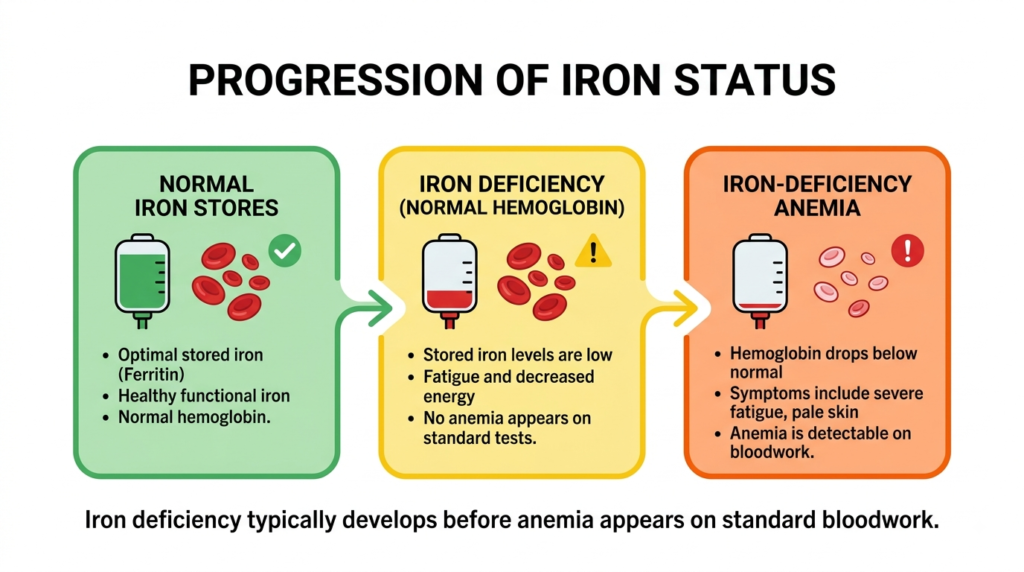
Yes, iron deficiency without anemia is real, common, and easy to miss. Hemoglobin can stay completely normal while your body’s iron reserves are already running low. Anemia is what happens after iron stores are exhausted — it’s a late-stage sign, not the first one.
Yes, You Can Have Iron Deficiency Without Anemia
Iron deficiency happens in stages. First, the iron stored in your tissues — measured by a protein called ferritin — starts to drop. Your body continues making normal red blood cells for a while by pulling iron from these reserves. Only once those reserves are largely depleted does hemoglobin production start to suffer, which is when iron-deficiency anemia appears on a standard blood count.

That means someone can have low ferritin, low stored iron, and real symptoms, while their complete blood count (CBC) still looks unremarkable. Research on non-pregnant women with normal hemoglobin has found that a substantial share still show biochemical evidence of iron deficiency once ferritin and serum iron are actually checked, since traditional screening approaches that rely solely on hemoglobin levels may overlook significant iron depletion in seemingly healthy people. Hematology specialists likewise note that iron deficiency without anemia — normal hemoglobin paired with low ferritin — is nearly twice as common as iron deficiency that has progressed to anemia.
In short: a normal hemoglobin result rules out anemia. It does not rule out iron deficiency.
Iron Deficiency vs. Iron-Deficiency Anemia
These two terms get used interchangeably, but they describe different points on the same timeline.
| Feature | Iron Deficiency (No Anemia) | Iron-Deficiency Anemia |
|---|---|---|
| Iron stores (ferritin) | Low | Low |
| Hemoglobin | Normal | Below normal range |
| Red blood cell production | Usually still adequate | Impaired |
| Symptoms | May be mild, absent, or nonspecific | Often more noticeable |
| Detected by | Ferritin and iron studies | Standard CBC (hemoglobin) |
| Stage | Earlier | Later |
Iron-deficiency anemia is generally confirmed once hemoglobin falls below roughly 130 g/L in men and 120 g/L in non-pregnant women over age 15, using World Health Organization reference points. Before hemoglobin ever crosses that line, ferritin and other iron markers can already show a problem.
What Is Ferritin and Why Does It Matter?
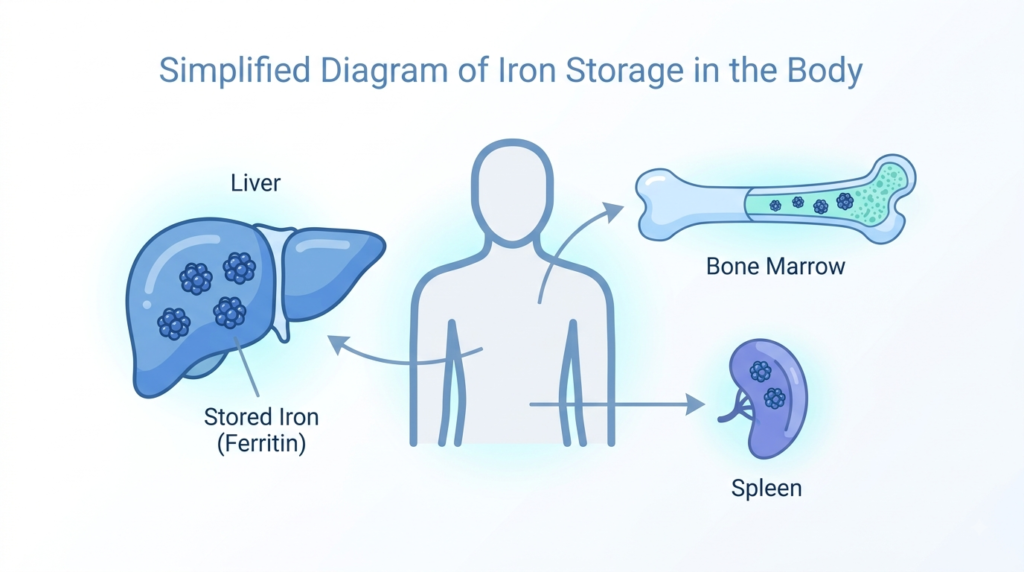
Ferritin is a protein that stores iron inside cells, mainly in the liver, spleen, bone marrow, and muscle, and a small amount of it circulates in the blood in proportion to how much iron is stored overall. That’s why a ferritin blood test is the main tool doctors use to estimate how much iron reserve your body actually has, rather than just how much iron is floating around at that moment.
There’s an important catch, though: ferritin is also an acute-phase reactant. That means it rises during inflammation, infection, liver disease, and some chronic illnesses — completely independent of how much iron you have stored. A person with true iron deficiency who also has an infection or inflammatory condition can end up with a ferritin result that looks deceptively normal, or even high. This is one reason ferritin should never be read alone. Doctors usually pair it with other iron markers, and sometimes with an inflammation marker like CRP, before drawing conclusions.
What Ferritin Level Is Considered Low?
There is no single ferritin number that applies to every person in every situation. Interpretation depends on the laboratory’s own reference range, your age, sex, pregnancy status, and whether inflammation is present.
That said, several thresholds are commonly used in clinical practice:
- A ferritin below roughly 15 µg/L is widely used as a marker confirming iron deficiency in someone without inflammation, based on UK primary care and formulary guidance, where a serum ferritin level below 15 micrograms/L confirms iron deficiency.
- Some clinicians use a slightly higher cutoff — around 30 µg/L — as the point below which iron stores in the bone marrow are essentially absent, per UK haematology reference material.
- After bariatric surgery or in other malabsorption contexts, some specialists separate “iron deficiency” (ferritin under about 15 µg/L) from milder “iron insufficiency” (ferritin under about 50 µg/L) in patients without inflammation, since ferritin is considered the best marker of iron status in this population.
- In people with chronic inflammatory conditions, ferritin can be misleadingly normal even up to 100–300 µg/L, which is why transferrin saturation is often used instead in that setting.
The takeaway: don’t try to self-diagnose from a single number pulled from the internet. Ask your doctor or lab report what reference range applies to your results and your specific health picture.
Symptoms of Iron Deficiency Without Anemia
Because hemoglobin is still normal, symptoms of non-anemic iron deficiency can be subtle, or they can be mistaken for stress, poor sleep, or simply “being busy.” Reported symptoms include:
- Persistent fatigue or low energy
- Reduced tolerance for exercise or physical exertion
- General weakness
- Difficulty concentrating or “brain fog”
- Headaches
- Dizziness
- Feeling unusually cold
- Restless legs, especially at night
- Increased hair shedding
These symptoms are not exclusive to iron deficiency. Thyroid problems, poor sleep, depression, vitamin B12 or folate deficiency, and many other conditions can cause an almost identical list of complaints. Having one or more of these symptoms doesn’t confirm low iron — it’s a reason to ask for testing, not a reason to assume the diagnosis.
Can Iron Deficiency Cause Hair Loss?
Iron plays a role in the hair growth cycle, and low ferritin has been studied as a possible contributor to increased hair shedding, particularly in women with a pattern called telogen effluvium. However, the evidence connecting ferritin levels specifically to hair loss is mixed, and not everyone with thinning hair has low iron. Hormonal changes, thyroid disorders, nutritional gaps beyond iron, certain medications, and genetic pattern hair loss can all produce similar shedding.
If you’re noticing more hair in the shower drain or on your pillow, it’s reasonable to ask your doctor about a ferritin test as part of the workup — but hair loss alone shouldn’t be treated as proof of iron deficiency without checking.
Can Iron Deficiency Cause Fatigue Even With Normal Hemoglobin?
This is one of the more surprising parts of iron physiology. Hemoglobin measures oxygen-carrying capacity in the blood. But iron does more than build hemoglobin — it’s also a required component of enzymes involved in cellular energy production in muscle and brain tissue.
So it’s biologically plausible that someone can have “enough” hemoglobin to avoid anemia while still not having enough iron for these other iron-dependent processes to run efficiently. This doesn’t mean every case of fatigue traces back to iron — fatigue has dozens of possible causes — but it does explain why some people with low ferritin and normal hemoglobin still report genuine, measurable tiredness. Research on iron deficiency without anemia has specifically flagged impaired cognition and reduced exercise capacity as possible consequences even when hemoglobin is preserved.
What Causes Iron Deficiency?
Iron deficiency develops when the body loses more iron than it takes in, or when it can’t absorb the iron it’s getting. Common contributors include:
- Heavy menstrual bleeding — one of the most common causes in women of reproductive age
- Pregnancy — iron needs rise substantially to support the growing baby and increased blood volume
- Inadequate dietary iron intake
- Vegetarian or vegan diets, when overall iron intake or absorption isn’t sufficient to compensate for the lower bioavailability of plant-based (non-heme) iron
- Gastrointestinal blood loss, including from ulcers or, less commonly, tumors
- Gastrointestinal disorders that impair absorption, such as celiac disease or inflammatory bowel disease
- Frequent blood donation
- Increased physiological needs, such as during growth spurts in adolescence
- Prior bariatric or gastric surgery, which alters how iron is absorbed
If iron deficiency shows up without an obvious explanation — especially in someone who isn’t menstruating heavily, isn’t pregnant, and eats a reasonably iron-containing diet — it’s worth investigating further rather than simply starting supplements and moving on.
Who Is Most at Risk?
Certain groups are more likely to develop iron deficiency:
- Menstruating women, especially those with heavy periods
- Pregnant women
- Infants and young children with high growth-related iron needs
- People following vegetarian or vegan diets without adequate planning
- Frequent blood donors
- People with gastrointestinal conditions affecting absorption
Men and postmenopausal women deserve special mention. In these groups, iron loss from menstruation isn’t a factor, so unexplained iron deficiency is more likely to point toward gastrointestinal blood loss and typically warrants medical evaluation, since in men and postmenopausal women, the most common cause is bleeding somewhere in the stomach or intestines.
How Is Iron Deficiency Diagnosed?
Doctors typically order a combination of tests, because no single number tells the whole story.
| Test | What It Tells You |
|---|---|
| Complete Blood Count (CBC) | Checks hemoglobin and red blood cell counts; screens for anemia |
| Hemoglobin | The main number used to confirm or rule out anemia |
| MCV (mean corpuscular volume) | Red blood cell size; often falls as iron deficiency progresses |
| Ferritin | Reflects stored iron; the primary marker for iron deficiency |
| Serum iron | Measures circulating iron at the moment of the test |
| TIBC / Transferrin | Reflects the blood’s capacity to transport iron; rises when iron is low |
| Transferrin saturation (TSAT) | Percentage of transferrin actually carrying iron; useful when ferritin is unreliable |
| CRP (inflammation marker) | Helps determine whether ferritin results may be falsely elevated |
A doctor may order several of these together — particularly ferritin alongside transferrin saturation and an inflammation marker — because ferritin by itself can be misleading in the presence of infection, chronic disease, or inflammation.
What Does Low Ferritin With Normal Hemoglobin Mean?
This exact combination — low ferritin, normal hemoglobin — is one of the most common patterns people search for after getting lab results back, and it deserves a direct answer: it typically means your iron stores are depleted even though your body hasn’t yet run out of iron for making red blood cells.
This shouldn’t be dismissed just because hemoglobin looks fine. A normal hemoglobin result reflects where things stand right now — it doesn’t guarantee they’ll stay that way, and it doesn’t rule out symptoms related to low iron stores elsewhere in the body. Depending on the ferritin level, your symptoms, and the likely cause, a doctor may recommend monitoring, dietary changes, iron supplementation, or further investigation into why your iron stores are low in the first place.
What Should You Do If Your Ferritin Is Low?
Rather than self-treating, the more useful next steps are:
- Discuss the result with a healthcare professional who can view it alongside your full history and other lab values
- Identify a possible cause — diet, blood loss, absorption issues, or increased needs
- Review your diet and any sources of blood loss, including menstrual history and digestive symptoms
- Consider additional testing if the cause isn’t obvious, especially in men or postmenopausal women
- Treat the underlying cause, not just the number on the lab report
Self-diagnosing from a single ferritin value found online, without professional interpretation, can lead to either unnecessary worry or a missed underlying condition.
Do You Need Iron Supplements If You Are Not Anemic?
Not automatically. Whether iron supplementation makes sense depends on your ferritin level, your symptoms, and what’s causing the deficiency.
Some clinical guidance supports treating confirmed iron deficiency even before anemia develops, with a general goal of restoring ferritin to a healthier range and resolving symptoms, since there’s limited evidence to guide exactly who benefits from treatment when anemia hasn’t developed yet. Iron replacement is far from risk-free: unnecessary or excessive iron supplementation can cause constipation, nausea, and other gastrointestinal side effects, and taking iron you don’t need doesn’t address whatever is actually causing fatigue, hair shedding, or other symptoms.
This article is not a recommendation to start or avoid any specific supplement or dose. If iron deficiency is confirmed, the type, dose, and duration of treatment should come from a healthcare provider, based on your individual labs and health history.
Iron-Rich Foods
Diet alone is not always enough to correct an established iron deficiency, but it plays a meaningful supporting role and matters for prevention.
Heme iron (better absorbed, from animal sources):
- Red meat
- Poultry
- Seafood
Non-heme iron (plant-based, absorbed less efficiently):
- Beans and lentils
- Tofu
- Fortified cereals and breads
- Spinach and other leafy greens
- Nuts and seeds
Pairing non-heme iron sources with vitamin C — think citrus fruit, bell peppers, or tomatoes alongside a lentil dish — can improve how much iron your body actually absorbs from plant foods. Coffee, tea, and calcium-rich foods eaten at the same meal can reduce iron absorption, so timing matters if you’re actively trying to rebuild your stores.
When Should You See a Doctor?
Reach out to a healthcare provider if you notice:

- Persistent, unexplained fatigue
- A ferritin result that comes back very low
- Iron deficiency that keeps recurring after treatment
- Heavy or prolonged menstrual bleeding
- Blood in your stool, or stool that looks black or tarry
- Unexplained weight loss
- Ongoing digestive symptoms
- Iron deficiency diagnosed in a man
- Iron deficiency diagnosed after menopause
- Suspected iron deficiency during pregnancy
These situations don’t automatically mean something serious is happening, but they’re the kinds of findings that benefit from a proper medical workup rather than guesswork.
When Is Iron Deficiency an Emergency?
Iron deficiency itself is rarely a medical emergency, but severe anemia or active bleeding can be. Seek urgent medical care if you experience:
- Severe shortness of breath
- Chest pain
- Fainting or near-fainting
- Severe, sudden weakness
- A rapid heartbeat along with concerning symptoms like chest pain or breathlessness
- Heavy, ongoing bleeding
- Signs of gastrointestinal bleeding, such as vomiting blood or passing black, tarry stools
These symptoms warrant immediate evaluation rather than waiting for a routine appointment.
Key Takeaways
- Iron deficiency can exist without anemia — hemoglobin often stays normal until iron stores are significantly depleted.
- Ferritin is the main test used to assess iron stores, but it can be falsely elevated by inflammation or infection.
- There’s no single ferritin cutoff that applies to everyone; interpretation depends on your lab’s reference range and your clinical picture.
- Symptoms like fatigue, hair shedding, and brain fog are nonspecific and can have many causes besides low iron.
- Iron deficiency in men or postmenopausal women deserves particular attention, since it can point to gastrointestinal blood loss.
- Diagnosis usually involves more than one test — ferritin alongside iron, TIBC/transferrin, and sometimes inflammation markers.
- Iron supplementation isn’t automatically appropriate for everyone with low ferritin; it should follow a confirmed diagnosis and professional guidance.
As a clinician, one of the most common gaps I see in how people interpret their own bloodwork is assuming that a “normal” hemoglobin means their iron status is fine. It doesn’t always. Iron deficiency is a process, not a single event — and hemoglobin is one of the last things to change, not the first.
If you’ve had unexplained fatigue, hair shedding, or restless legs and your hemoglobin came back normal, that doesn’t necessarily close the book on iron. Ask specifically for a ferritin test, and ideally iron studies alongside it, especially if inflammation could be muddying the picture. If you’re a man or a postmenopausal woman with confirmed iron deficiency and no obvious cause like heavy blood loss, please don’t brush it off — it’s worth having your doctor look further into where the iron is going.
None of this is a substitute for an actual conversation with your own physician, who can see your full history and your actual numbers. This article is meant to help you ask better questions, not to replace that conversation.
— Dr. Abdul Raheem
1. Can you have iron deficiency without anemia?
Yes. Iron deficiency affects the body’s iron reserves, while anemia specifically refers to low hemoglobin. Iron stores can drop well before hemoglobin is affected, so it’s entirely possible to have depleted iron with a normal blood count.
2. What does low ferritin with normal hemoglobin mean?
It generally means your iron stores are low, but your body is still producing enough hemoglobin to avoid anemia — at least for now. It’s worth discussing with a doctor rather than ignoring simply because hemoglobin looks normal.
3. What ferritin level indicates iron deficiency?
Thresholds vary by lab and clinical context, but ferritin below roughly 15–30 µg/L is commonly used to suggest depleted iron stores in someone without inflammation. Your own lab’s reference range and your doctor’s interpretation matter more than any single number found online.
4. Can low ferritin cause fatigue?
It’s possible. Iron supports cellular energy production beyond just carrying oxygen in the blood, so low iron stores may contribute to fatigue even with normal hemoglobin. However, fatigue has many possible causes, so it shouldn’t be assumed to be from iron alone.
5. Can iron deficiency cause hair loss?
Low ferritin has been studied as a possible contributor to increased hair shedding in some people, but the evidence is mixed and hair loss has many other causes. A ferritin test can be a reasonable part of the workup for unexplained hair shedding.
6. Should I take iron supplements if my ferritin is low?
That depends on your specific ferritin level, symptoms, and underlying cause, which is why it’s best discussed with a healthcare provider rather than self-treating. Unnecessary iron supplementation can cause side effects and doesn’t address the real cause of the deficiency.
7. How long does it take to restore iron stores?
This varies widely depending on the cause, treatment approach, and individual absorption, and can range from weeks to several months of appropriate treatment. Your doctor can guide monitoring and re-testing intervals based on your specific situation.
8. What causes low ferritin?
Common causes include heavy menstrual bleeding, pregnancy, inadequate dietary iron, gastrointestinal blood loss, malabsorption conditions like celiac disease, and frequent blood donation. Unexplained low ferritin, especially in men or postmenopausal women, may need further evaluation to find the underlying cause.
References
- National Institutes of Health, Office of Dietary Supplements. “Iron — Health Professional Fact Sheet.” https://ods.od.nih.gov/factsheets/Iron-HealthProfessional/
- National Institutes of Health, Office of Dietary Supplements. “Iron — Consumer Fact Sheet.” https://ods.od.nih.gov/factsheets/Iron-Consumer/
- MedlinePlus, National Library of Medicine. “Ferritin Blood Test.” https://medlineplus.gov/lab-tests/ferritin-blood-test/
- American Society of Hematology. “Iron-Deficiency Anemia.” https://www.hematology.org/education/patients/anemia/iron-deficiency
- StatPearls, NCBI Bookshelf, National Institutes of Health. “Iron-Deficiency Anemia.” https://www.ncbi.nlm.nih.gov/books/NBK448065/
- NHS Inform. “Iron Deficiency Anaemia — Symptoms and Treatments.” https://www.nhsinform.scot/illnesses-and-conditions/nutritional/iron-deficiency-anaemia/